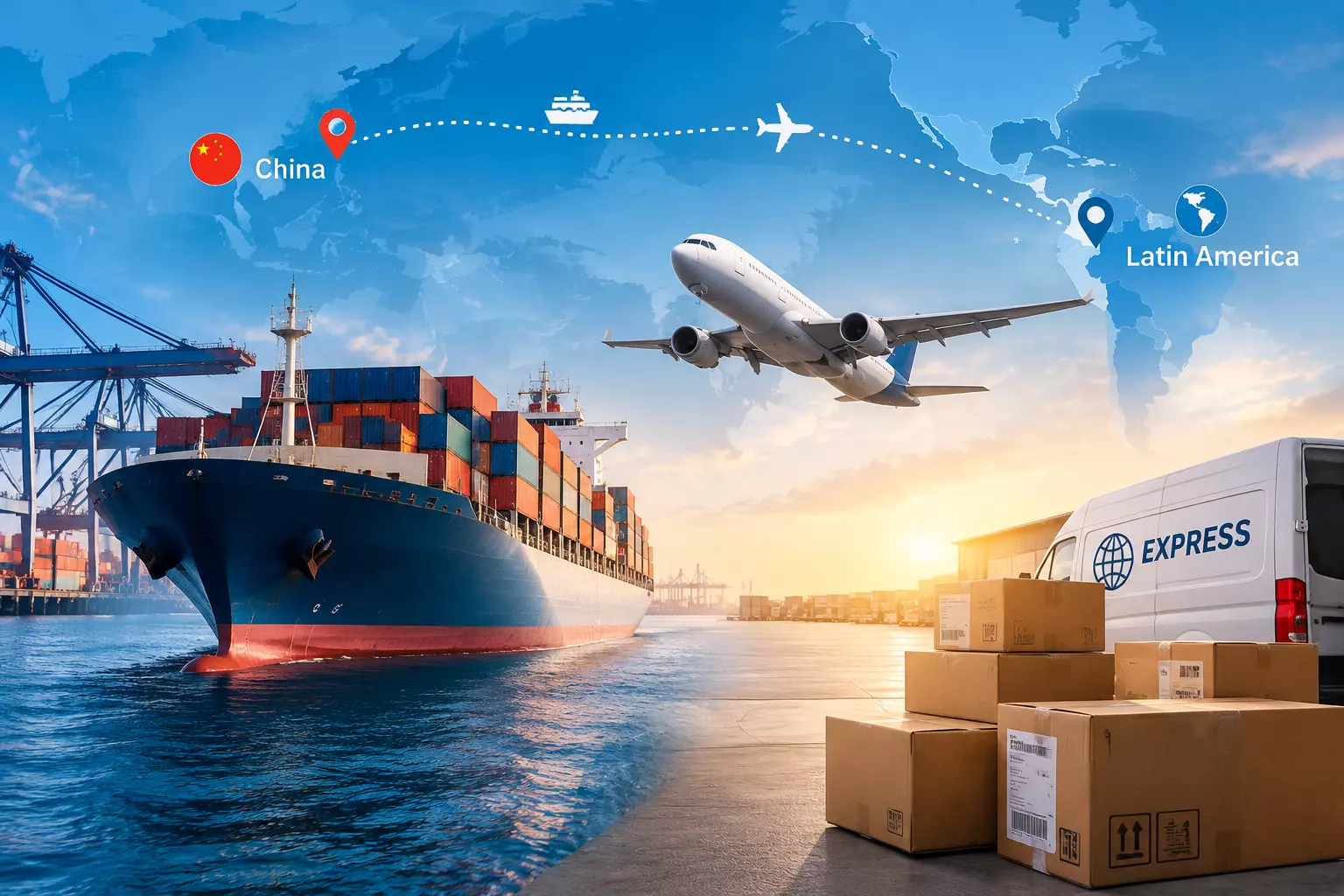
When importing goods from China to Latin America, choosing between sea freight, air freight, and courier services is not simply a matter of finding the lowest rate. It is also not safe to assume that small shipments should always go by courier and large shipments by sea.
The decision depends on three questions: What is the deadline for receiving the goods? How will the shipment's chargeable weight be calculated? And what is the total cost of getting the goods to their destination?
For example, if you need to ship electronic products from China to Mexico, courier service may be more practical for sending supplier samples. If you have a commercial order that requires quick inventory replenishment, it is worth comparing air freight with courier services. On the other hand, if you are shipping a batch of inventory intended to cover sales over the next few months, sea freight is worth evaluating first.
For this reason, it is better to follow the decision-making process outlined below rather than requesting a quote for a specific shipping method right away.
The first step is not to compare prices but to determine the latest date by which the goods must arrive at their destination.
You need to distinguish between two dates: the date when the customer expects to receive the goods and the deadline that the commercial operation absolutely cannot exceed. The first is the target date; the second is a key criterion for ruling out unsuitable shipping options.
Transit times from China to Latin America vary by country, city, route, connections, and customs clearance. The following ranges are for initial planning reference only and do not guarantee delivery times for any specific shipment.
| Shipping Method | Reference International Transit Time | What to Consider |
|---|---|---|
| Sea freight FCL (Full Container Load) | Approximately 25–55 days port to port | Pre-shipment operations, customs clearance, and last-mile delivery must also be considered. |
| Sea freight LCL (Less than Container Load) | Approximately 30–58 days port to port, or longer | Cargo consolidation at origin and deconsolidation at destination can add time. |
| Air freight | Approximately 3–10 days airport to airport | This does not mean the goods have cleared customs or been delivered to the recipient's address. |
| International courier | Usually 3–10 business days, depending on the service | Remote areas, special cargo, and customs clearance circumstances can affect delivery times. |
The principle is straightforward: first confirm the estimated door-to-door delivery time, then decide which options are worth requesting quotes for.
Suppose the goods must arrive within three weeks and the estimated transit time for a sea freight option already exceeds that limit. In that case, choosing sea freight solely because its rate is lower does not make sense. It is better to compare air freight or courier options that can meet the deadline first.
On the other hand, if the shipment is intended for regular inventory replenishment and there is still plenty of time before the stock runs out, you can include sea freight among the options and then compare the total cost of each alternative.
It is also important to remember that a shipment's arrival at a seaport or airport does not mean the importer can immediately use or sell the goods. Customs clearance, tax payments, inspections, and last-mile delivery can all affect the actual delivery timeline. Therefore, do not ask the freight forwarder only how many days transportation takes. Confirm when the transit time starts counting and at what stage it ends.
When the delivery schedule allows for sea freight, the next step is to determine whether it is better to ship the goods as less-than-container-load cargo (LCL) or use a full container (FCL).
Sea freight LCL (Less than Container Load) means sharing a container with goods from other shippers. The cost is generally calculated according to chargeable volume, weight, and the applicable billing rules for the route.
This option is suitable for shipments whose volume does not reasonably justify using an entire container. However, a small shipment does not necessarily cost proportionally less.
Some services have a minimum billable volume or minimum charge. In addition, LCL shipments may incur receiving and consolidation fees, deconsolidation charges, documentation fees, and handling costs at the destination port.
Therefore, when requesting a quote for a small shipment, it is worth confirming at least the following:
What is the minimum billable volume or minimum charge?
Which origin charges in China are included in the quote?
Are destination deconsolidation, handling, and documentation fees charged separately?
Does the quote cover port-to-port transportation only, or does it also include customs clearance and delivery?
How long is the estimated period from cargo handover for shipment until the goods are available for collection at the destination?
If you receive only a sea freight rate per cubic meter and calculate the total cost based on that figure, you may underestimate the actual expense.
FCL (Full Container Load) means using an entire container for a shipment. Common container types include 20GP, 40GP, and 40HQ. The choice depends on the cargo volume, weight, and loading requirements.
There is no fixed threshold that determines when switching from LCL to FCL makes sense on every route. You can use the following reference when requesting quotes to identify the more suitable option.
| Total Cargo Volume | Recommended Action |
|---|---|
| Small volume | Request an LCL quote and confirm the minimum charge and destination fees. |
| Approximately 12–18 CBM | Request quotes for both LCL and a 20GP container and compare the total cost. |
| Around 20 CBM or more | Give particular consideration to FCL and confirm the actual available loading capacity. |
| Very large volume or cargo requiring a dedicated container | Compare different container types based on weight, volume, and loading requirements. |
The 12–18 CBM range is only a reference for requesting both quotes, not a universal industry threshold. On some routes, a full container may be worthwhile at a lower volume; on others, it may not be.
In addition, the internal capacity of a 20GP container is typically around 33 CBM. However, this does not mean that 33 CBM of cargo can always be loaded. Carton dimensions, product shapes, stacking arrangements, weight limits, and unused space all affect the actual loading capacity.
When comparing LCL and FCL, calculate the total cost of both options for the same shipment rather than comparing sea freight charges alone.
If the FCL quote appears more economical, also confirm whether additional charges apply for inland transportation, container loading, documentation, or destination operations. A meaningful comparison is possible only when both options cover the same scope of service.
When sea freight cannot meet the deadline or the goods are better suited to air transportation, the next step is to compare air freight with international courier services.
Both options use air transportation, but they operate differently. Air freight is generally arranged around the movement of cargo between airports. Pickup, customs clearance, and onward delivery may be contracted separately. International courier services typically provide a more comprehensive service covering pickup, transportation, and delivery. The exact scope depends on the terms of each quote.
If you need to send product samples, documents, or small quantities of goods from China and want them to reach the customer quickly, you can start by requesting an international courier quote.
For example, a Latin American customer may need to receive a sample first to check product quality and specifications before deciding whether to place a larger order. In this case, a door-to-door courier service is often practical because there is no need to arrange airport pickup and last-mile delivery separately for a small shipment.
However, a small shipment is not always cheaper to send by courier. Package dimensions, chargeable weight, destination, and customs requirements all affect the price. If the samples take up considerable space, it is also worth comparing actual quotes.
When a shipment grows from a few packages to several dozen or even hundreds of kilograms, you should not automatically assume that air freight will be cheaper than courier services.
The recommended approach is to provide the freight forwarder with the same information for both options: cargo description, number of packages, packaging dimensions, actual weight, destination, and delivery deadline. Based on these details, request one air freight quote and one courier quote.
When comparing them, pay attention to three aspects:
Chargeable weight: Calculation rules may differ depending on the service.
Service scope: Check whether the air freight quote includes pickup, customs clearance, and delivery, and whether the courier quote involves any potential additional charges.
Delivery time: Do not compare air transit time alone. Confirm when the entire process is expected to be completed.
If air freight has a lower international freight rate but requires separate payments for pickup, customs brokerage, and delivery, the final cost may approach that of courier service. Conversely, if the cargo is relatively heavy and destination service conditions are favorable, air freight may also offer advantages.
Air freight is generally not charged based solely on actual weight. For bulky, lightweight goods, volumetric weight may exceed actual weight and directly affect shipping costs.
A commonly used reference formula for calculating volumetric weight in air freight is:
Volumetric Weight (kg) = Length (cm) × Width (cm) × Height (cm) ÷ 6000
Some international courier services use a different divisor, such as 5000. The applicable rule depends on the carrier's billing terms.
For example, a shipment contains 10 cartons. Each carton measures 60 × 40 × 40 cm and weighs 8 kg.
Total actual weight: 10 × 8 = 80 kg.
Total volume: 10 × 0.6 × 0.4 × 0.4 = 0.96 CBM.
Volumetric weight: Using a divisor of 6000, the result is 160 kg.
If the service charges based on whichever is greater between actual weight and volumetric weight, this shipment could be billed at 160 kg instead of 80 kg.
Therefore, when requesting a quote, do not provide only the total weight. The external dimensions of each carton, the total number of packages, and the total actual weight are important details for evaluating air freight or courier costs.
If the goods contain batteries, liquids, powders, magnetic materials, or are subject to special requirements relating to markings, certifications, or other conditions, you must inform the freight forwarder about the product and its characteristics.
Different carriers and shipping channels may have different acceptance, packaging, documentation, and declaration requirements. The fact that goods can be shipped through one particular channel does not mean that all air freight or courier services will accept them.
Before making a decision based on price or estimated delivery time, confirm that the carrier accepts the goods and that all shipping requirements can be met.
If two or more options among sea freight, air freight, and courier can meet the delivery deadline, you can move to the second stage of the comparison: calculating the total cost.
Here, it is important to avoid a common mistake: treating the international freight rate quoted by the freight forwarder as the final shipping cost.
A shipment from China to Latin America may include the following charges:
| Cost Item | What to Confirm |
|---|---|
| Origin charges in China | Pickup, storage, export operations, and documentation. |
| International transportation | Sea freight, air freight, or courier charges and applicable surcharges. |
| Destination handling charges | Port or airport charges, deconsolidation, documentation, and other operations. |
| Customs clearance service | Whether customs broker fees or customs clearance service charges are included. |
| Import taxes | Who is responsible for applicable customs duties, import taxes, and other taxes. |
| Last-mile delivery | Whether the goods will be delivered to the specified city, address, or postal code. |
| Other applicable charges | Inspections, storage, remote-area fees, special dimensions, or extraordinary handling operations. |
The cost structure varies by shipping method. For sea freight LCL, pay particular attention to minimum charges and destination deconsolidation fees. For air freight, check airport charges and onward delivery costs. For international courier, confirm the applicable chargeable weight, service scope, and potential additional charges.
In addition, customs clearance fees are not the same as import taxes. A customs broker may charge for handling the relevant procedures, while customs duties and taxes depend on the destination country's regulations, cargo classification, declared value, and other applicable conditions.
Suppose you have a shipment that needs to travel from Guangzhou to Mexico City and have received two quotes: one for sea freight LCL and another for air freight.
The international freight rate for the sea shipment is lower, but you will need to pay destination handling charges and delivery costs after arrival. By contrast, the other quote for air freight has a higher international freight rate but already includes some destination services.
In this situation, comparing only the first figure on each quote is not enough. Ask the freight forwarder to specify the following:
Whether origin charges in China are included.
The international freight rate and applicable surcharges.
Whether destination handling charges are included.
Who is responsible for customs clearance, import taxes, and delivery.
How the estimated delivery time is calculated and which stages it covers.
Only after adjusting both quotes to cover the same scope of service can you compare which shipping method has the lower total cost.
You should also consider the actual impact of the delivery deadline. If sea freight saves part of the freight cost but causes a stock shortage or a lost sales opportunity because the goods do not arrive on time, a lower freight rate does not necessarily mean a lower total cost.
Therefore, the most reasonable decision-making sequence is to meet the delivery deadline first, compare suitable shipping methods based on cargo volume next, and calculate the total cost last.
Choosing the right shipping method does not guarantee that the goods will be delivered without problems. For imports into Latin America, the destination country's regulations, importer requirements, and customs clearance arrangements can also determine whether a shipping plan is feasible.
It is better to check these conditions before shipping rather than discovering after the goods arrive at the port that documents are missing or import requirements have not been met.
If the goods are being shipped to Mexico, you need to verify the import and declaration requirements according to the product type and the entity responsible for the import. Some commercial imports are subject to registration in the Padrón de Importadores. The importer or local customs broker must confirm the specific applicable requirements.
If this is your first time shipping goods to Mexico, do not ask the freight forwarder about freight charges alone. Also confirm whether the recipient can act as the importer, which documents the product requires, and whether the quote includes customs clearance and last-mile delivery.
For imports into Brazil, it is particularly important to pay attention to importer requirements, declaration procedures, cargo classification, and applicable taxes. Regulatory requirements may vary depending on the product and the circumstances of the import, so the same customs clearance conditions should not be applied to all goods.
If you intend to use a service that includes customs clearance and tax handling, first clarify who will act as the importer, which services are included, and how responsibilities are allocated. You can then determine whether the quote is suitable for the shipment.
Customs clearance requirements in Chile, Peru, Colombia, and other Latin American countries may also vary depending on the product and the importer.
Therefore, when requesting a quote, provide at least the destination country, delivery city, product name, and intended use. If you already work with a local customs broker, you can also ask the freight forwarder to coordinate transportation details with them. This helps you avoid comparing international freight charges alone while overlooking the operational requirements that apply after the goods arrive.
Not necessarily. If only part of a shipment needs urgent delivery, you can consider separating that portion from the regular inventory and shipping the two portions using different methods.
Suppose a Latin American importer purchases 500 kg of products from China. Of this amount, 50 kg must be delivered to a customer as soon as possible, while the remaining 450 kg will be used as inventory for the coming months.
In this case, you can compare two options:
Ship everything by air: The operation is relatively straightforward, and all the goods can arrive faster, but transportation costs may be high.
Split the shipment: Compare air freight and courier for the urgent 50 kg, and evaluate sea freight for the 450 kg intended for regular inventory.
The advantage of splitting the shipment is that you can reserve faster shipping methods for the goods that genuinely need them instead of paying a higher rate for the entire inventory.
However, splitting a shipment does not necessarily reduce the total cost. Separating the cargo may increase pickup, documentation, export handling, and destination charges. If the two portions are shipped separately, some of these charges may also be billed separately.
Therefore, before deciding whether to split the shipment, ask the freight forwarder to calculate both the total cost of shipping all the goods using one method and the cost of separating the urgent portion from the regular inventory. Then make your decision based on the delivery requirements of each portion.
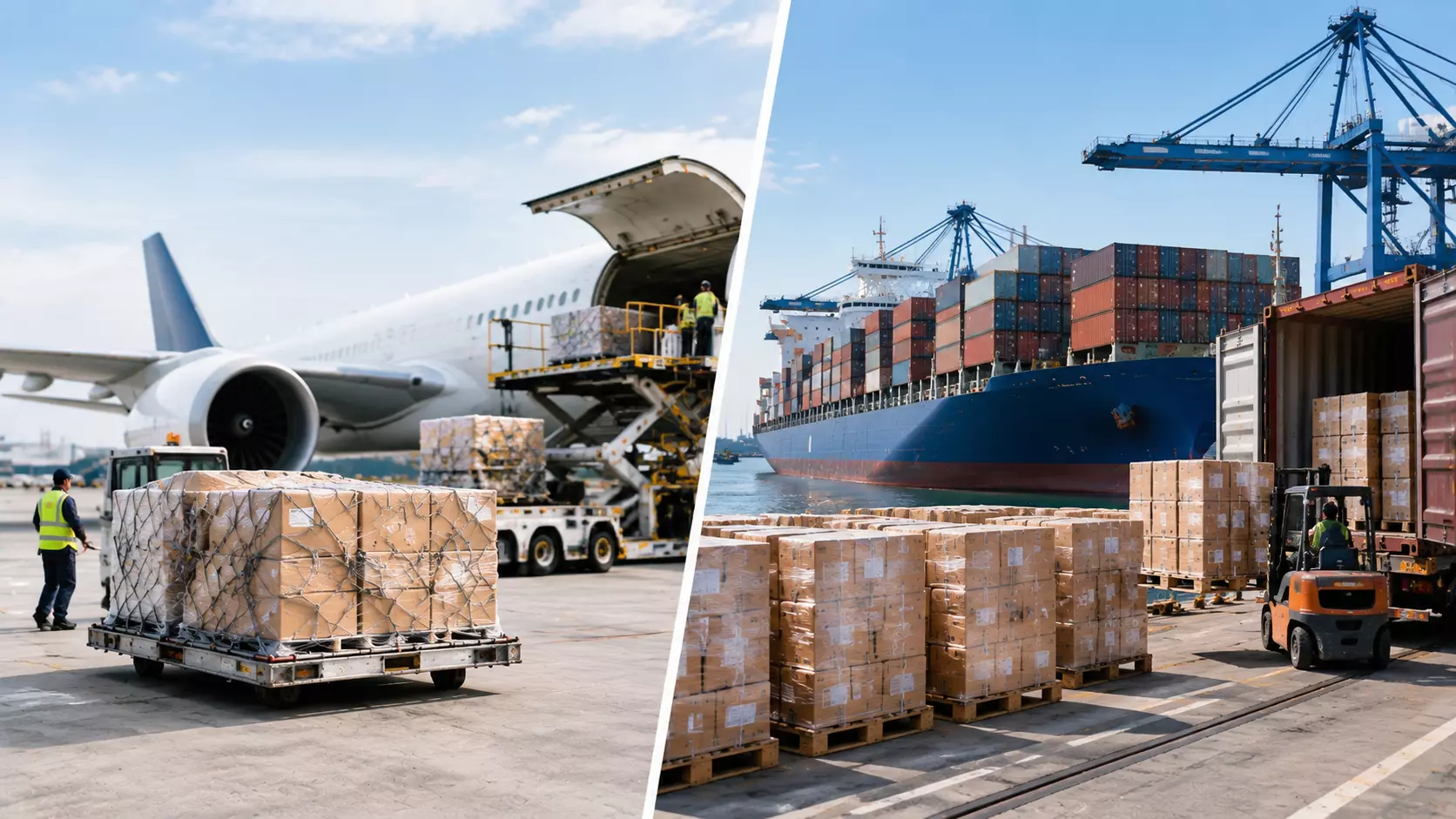
Once you have identified the shipping options that may work, the next step is to prepare complete information about the goods. The more accurate the information, the easier it will be to compare shipping methods and the lower the risk of discovering unquoted charges after the shipment has been arranged.
When requesting a quote from a freight forwarder, we recommend providing the following information:
Cargo information: Product name, intended use, material, and whether the goods contain batteries, liquids, or other special components.
Packaging information: Total number of packages, length, width, and height of each carton, and the weight of each carton.
Total shipment quantity: Total actual weight and total volume. If you do not yet know the volume, you can initially provide the dimensions of each carton.
Origin: Pickup city in China or the supplier's location.
Destination: Destination country and city in Latin America; if possible, also provide the postal code or exact address.
Delivery deadline: The latest acceptable delivery date and whether the shipment can be split.
Required services: Port-to-port, airport-to-airport, or door-to-door transportation. Also indicate whether you need customs clearance, tax handling, and last-mile delivery.
When you receive the quotes, you do not need to ask the freight forwarder to recommend a single option right away. If you have not yet decided on the shipping method, you can first request a comparison between two viable alternatives, such as LCL versus a 20GP container, or air freight versus international courier.
Then focus on checking three things: which option meets the deadline, what the total cost of each alternative is, and whether both quotes cover the same scope of service.
When these details are clear, choosing a shipping method is no longer a guess based on experience but a decision grounded in the actual requirements of the order.
There is no single answer for every product and destination. For high-volume cargo with flexible delivery schedules, it is generally worth evaluating sea freight first. Air freight and courier services suit different delivery timelines, shipment volumes, and service requirements. The final decision should be based on the total cost of options that meet the same delivery requirements.
The decision cannot be made based solely on the 100 kg threshold. For samples and small packages, you can start by requesting an international courier quote. If the goods take up considerable space or you want to compare prices across different services, you can also request an air freight quote. The key is to provide the exact dimensions, weight, and destination so that each option can be quoted according to its own billing rules.
There is no fixed threshold that applies to every route. When a shipment reaches approximately 12–18 CBM, you can request quotes for both LCL and a 20GP container. However, this range is only a starting point for comparison. The actual decision depends on route rates, minimum charges, destination fees, cargo weight, and loading conditions.
First, confirm that both quotes use the same criteria for calculating delivery time. Airport-to-airport transit time should not be compared directly with the door-to-door delivery time offered by a courier service. You should also check whether the estimated time includes pickup, export procedures, customs clearance, and last-mile delivery.
You should not assume this based on the DDP term alone. Confirm which transportation, customs clearance, tax, and delivery services are included in the quote. You must also verify the destination country's import requirements, who will act as the importer, and how responsibilities are allocated between the parties. The final decision should be based on the commercial terms and service scope agreed upon in writing.
When shipping goods from China to Latin America, sea freight, air freight, and international courier services serve different purposes. The most effective way to choose is not to classify shipments by weight alone or always pursue the lowest rate.
First, determine the delivery deadline and eliminate options that cannot meet it. If sea freight is viable, compare LCL and FCL. If you need air transportation, evaluate air freight and courier services based on the cargo characteristics, chargeable weight, and service scope. Finally, calculate the origin charges, international freight, destination fees, customs clearance, taxes, and delivery costs together.
The right shipping method is the one that meets the delivery requirements while keeping the shipment's costs and risks within acceptable limits.

 Español
 English
 Português