
 Español
 English
 Português
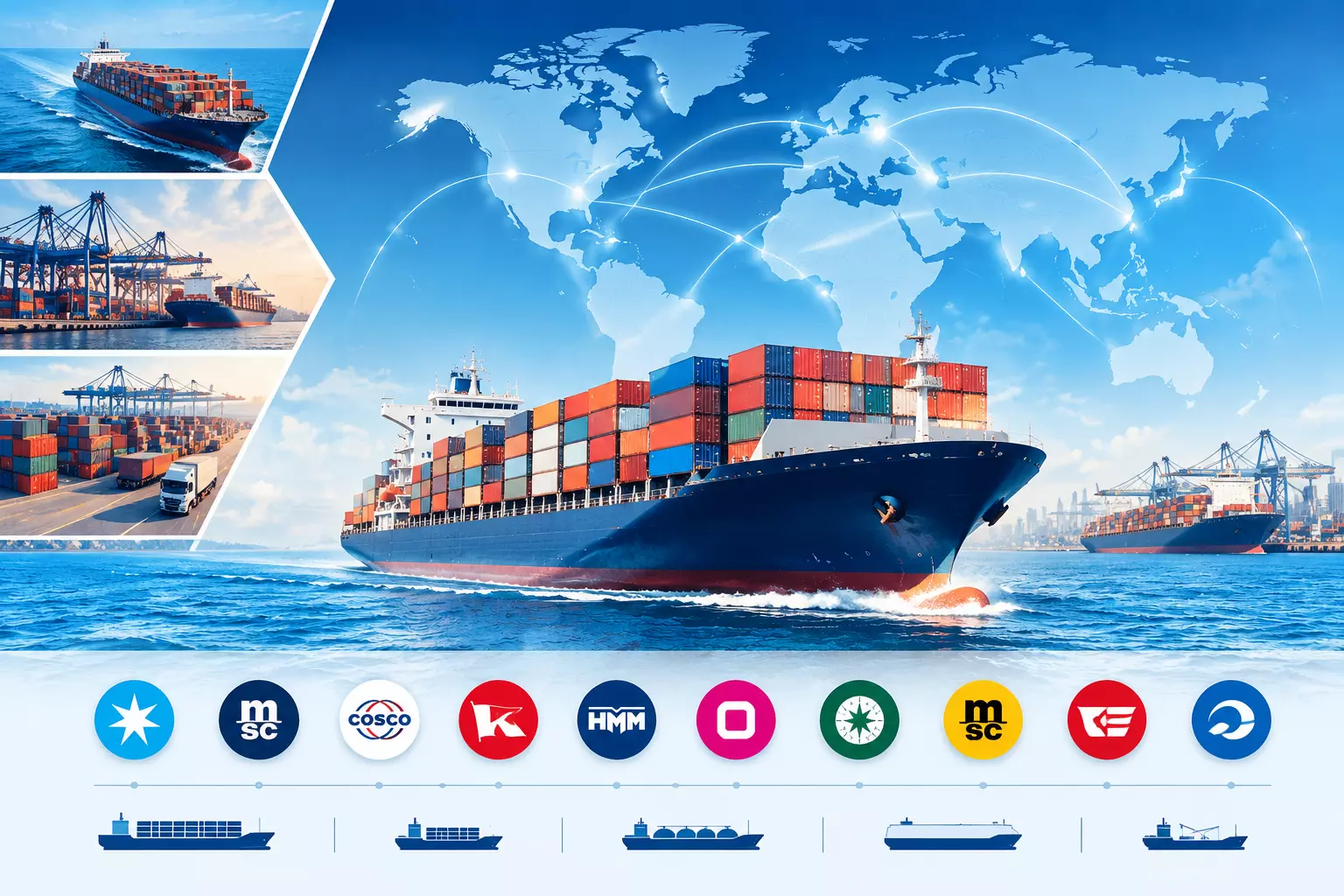
The ten largest container shipping companies account for approximately 85% of the world's total container shipping capacity. According to Alphaliner data from November 2026, MSC leads the ranking, followed by Maersk, CMA CGM, and COSCO SHIPPING.
These shipping lines connect major markets across Asia, Europe, the Americas, and Africa, but their service networks, port connections, and regional coverage differ. For importers and exporters, understanding these differences is more useful than selecting a shipping line based solely on its fleet size.
This article examines the world's ten largest container shipping companies, their operating capacities, service networks, and the shipping alliances and cooperation agreements that shape international container transportation.
1. Top 10 Largest Container Shipping Companies in 2026
According to Alphaliner's ranking, MSC holds the top position with approximately 7.48 million TEU of operating capacity, followed by Maersk with 4.70 million TEU and CMA CGM with 4.49 million TEU.
The ranking is based on the total container capacity of vessels operated by each company, including both owned and chartered ships. It does not represent the actual volume of cargo transported, nor does it measure schedule reliability or service quality.
Global Ranking of Container Shipping Lines by Fleet Capacity
| Rank | Shipping Company | Operating Capacity (TEU) | Global Market Share |
|---|---|---|---|
| 1 | MSC | 7,482,184 | 21.5% |
| 2 | Maersk | 4,699,819 | 13.5% |
| 3 | CMA CGM Group | 4,491,482 | 12.9% |
| 4 | COSCO Group | 3,683,714 | 10.6% |
| 5 | Hapag-Lloyd | 2,410,317 | 6.9% |
| 6 | ONE | 2,219,135 | 6.4% |
| 7 | Evergreen | 2,057,263 | 5.9% |
| 8 | HMM | 1,034,348 | 3.0% |
| 9 | Yang Ming | 771,280 | 2.2% |
| 10 | ZIM | 698,193 | 2.0% |
Source indicated: Alphaliner Top 100, November 4, 2026. Figures represent operated fleet capacity, with subsidiaries consolidated under their respective shipping groups.
1. MSC — Mediterranean Shipping Company
MSC is the world's largest container shipping company by operated fleet capacity, with more than 7.48 million TEU and an estimated global market share of 21.5%.
Headquartered in Switzerland, MSC operates an extensive shipping network connecting Asia, Europe, Africa, and the Americas. In addition to major intercontinental trade routes, the company provides regional connections serving markets across Latin America, Africa, and the Mediterranean.
This network enables MSC to serve a wide range of destinations through a combination of mainline services and regional feeder connections.
2. Maersk
Denmark-based Maersk ranks second globally, with approximately 4.70 million TEU of operated fleet capacity.
The company combines container shipping with logistics services and inland transportation connections. Maersk operates across major international trade routes and has participated in Gemini Cooperation alongside Hapag-Lloyd since February 2025.
This cooperation is built around a network of mainline services supported by regional connections through strategically selected hub ports.
3. CMA CGM — Compagnie Maritime d'Affrètement – Compagnie Générale Maritime
CMA CGM is a French shipping group ranked third worldwide, with approximately 4.49 million TEU of operated capacity.
Its network covers major trade routes connecting Asia, Europe, the Americas, and Africa, along with regional shipping services. The group operates several shipping brands and subsidiaries, including APL, ANL, and CNC.
This structure allows CMA CGM to combine intercontinental shipping services with regional market coverage. The company is also a member of OCEAN Alliance, although not all of its shipping routes operate under this agreement.
4. COSCO SHIPPING
COSCO Group ranks fourth globally, with approximately 3.68 million TEU of operated fleet capacity.
The Chinese shipping group includes COSCO SHIPPING Lines and OOCL, among other companies. Its network connects major ports in China and other Asian markets with Europe, the Americas, and destinations worldwide.
OOCL's fleet capacity is already included in COSCO Group's consolidated figures. It should therefore not be counted separately when comparing the shipping companies in this ranking.
5. Hapag-Lloyd
Hapag-Lloyd is a German container shipping company with approximately 2.41 million TEU of operated fleet capacity, placing it fifth worldwide.
The company operates international shipping services connecting Europe, Asia, and the Americas, including routes and connections serving Mexico, Central America, the Caribbean, and South America.
Hapag-Lloyd participates in Gemini Cooperation on major East–West trade routes. It also maintains services to Latin America through additional networks and agreements outside this cooperation.
6. ONE — Ocean Network Express
Ocean Network Express, commonly known as ONE, ranks sixth worldwide, with approximately 2.22 million TEU of operated fleet capacity.
The company was established through the integration of the container shipping businesses of three Japanese maritime groups: Kawasaki Kisen Kaisha (K Line), Mitsui O.S.K. Lines (MOL), and Nippon Yusen Kabushiki Kaisha (NYK).
ONE operates transpacific services, Asia–Europe routes, and connections to Latin America. Its shipping network combines independently operated services with shared services established through cooperation agreements with other carriers.
7. Evergreen Marine
Evergreen, headquartered in Taiwan, ranks seventh globally, with approximately 2.06 million TEU of operated fleet capacity.
The company maintains an international container shipping network covering major trade routes between Asia, Europe, and North America, as well as services to other regional markets.
Evergreen is a member of OCEAN Alliance alongside CMA CGM, COSCO SHIPPING, and OOCL. This cooperation enables participating carriers to share vessel capacity on selected services while maintaining independent commercial operations.
8. HMM
HMM is a South Korean container shipping company ranked eighth worldwide, with approximately 1.03 million TEU of operated fleet capacity.
Its international operations have a significant presence on transpacific and Asia–Europe trade routes.
Since February 2025, HMM has participated in Premier Alliance alongside ONE and Yang Ming. The agreement enables operational cooperation on selected routes, while each shipping line maintains its own commercial terms and services.
9. Yang Ming Marine Transport
Yang Ming is a Taiwan-based shipping company ranked ninth globally, with approximately 771,000 TEU of operated fleet capacity.
Its international network includes shipping services between Asia and North America, as well as connections to Europe and other markets.
Like ONE and HMM, Yang Ming participates in Premier Alliance. Its overall coverage combines services operated under cooperation agreements with other shipping operations managed by the company.
10. ZIM Integrated Shipping Services
ZIM, headquartered in Israel, completes the top ten with approximately 698,000 TEU of operated fleet capacity.
Its shipping network includes transpacific routes, services within the Americas, and connections to other international markets.
Unlike carriers participating in Gemini Cooperation, OCEAN Alliance, or Premier Alliance, ZIM develops its network through a combination of independently operated services and specific cooperation agreements with other shipping lines.
Its operating model relies on a relatively high proportion of chartered vessels, a characteristic also reflected in Alphaliner's published fleet statistics.
Does the Largest Shipping Company Necessarily Offer the Best Service?
No. A shipping company's global fleet capacity indicates the scale of its operations, but it does not determine which carrier offers the most suitable connection between two specific ports.
A highly ranked shipping line may still require transshipment to reach a particular destination. Meanwhile, a smaller carrier may offer a direct service or a more convenient connection for the same shipment.
The ranking therefore helps illustrate the relative size of each company, while choosing the right shipping line requires evaluating available shipping routes, port calls, and the specific requirements of the shipment.
2. Major Shipping Routes Operated by Leading Container Shipping Lines
The world's leading container shipping lines organize their services around major trade corridors connecting Asia, Europe, and the Americas, alongside regional routes serving Africa, the Middle East, Oceania, and Latin America.
A shipping line's coverage depends on more than the number of countries it serves. Direct port connections, sailing frequency, and the destinations reached through transshipment services are also important factors.
Major Container Shipping Trade Routes
| Trade Route | Main Connections | Key Characteristics |
|---|---|---|
| Asia–Europe | China and other Asian countries with Northern Europe and the Mediterranean | Long-distance intercontinental shipping services |
| Transpacific | Asia with the west and east coasts of North America | Different service networks depending on the coast and destination ports |
| Transatlantic | Europe with North America | Shipping services between European and North American ports |
| North–South Routes | Asia, Europe, and North America with Latin America, Africa, and other markets | Direct services, regional routes, and transshipment connections |
Asia–Europe: Connections to Northern Europe and the Mediterranean
The Asia–Europe trade route connects major Asian manufacturing centers with ports such as Rotterdam, Hamburg, Antwerp, Valencia, and other European destinations.
Shipping lines operate separate service networks for Northern Europe and the Mediterranean. For example, the OCEAN Alliance DAY 10 network announced for 2026 includes seven Asia–Northern Europe services and four Asia–Mediterranean services.
A single shipping line may offer several connections to Europe, but these services do not necessarily call at the same ports or follow the same route.
Route selection can also be affected by whether vessels transit the Suez Canal or divert around the Cape of Good Hope. These alternatives change the sailing distance and may affect transit times and operating costs.
Transpacific: Shipping Services to North America
The transpacific trade corridor connects major ports in Asia with the United States and Canada.
One important distinction is how shipping services are distributed between the west and east coasts of North America.
Los Angeles, Long Beach, and Vancouver are examples of major West Coast destinations, while New York/New Jersey, Savannah, and Norfolk are among the main ports serving the U.S. East Coast.
In its 2026 network, OCEAN Alliance announced 22 transpacific services: 14 serving the West Coast of the United States and Canada, and eight serving the U.S. East Coast.
For companies importing from China, the availability of services to both coasts makes it possible to compare different combinations of ocean freight and inland transportation. However, choosing a port that is geographically closer does not always result in the lowest total shipping cost.
Transatlantic: Europe and North America
Transatlantic shipping services connect European markets with the United States and Canada.
Major connections include ports in Northern Europe and the Mediterranean, with destinations along the North American Atlantic coast.
Under the 2026 service program, OCEAN Alliance carriers, together with ONE, announced three transatlantic services through a separate cooperation agreement, connecting Northern Europe with the U.S. East Coast and ports along the Gulf of Mexico.
A shipping line's presence in the transpacific trade does not necessarily mean it offers equivalent coverage across the Atlantic. Each carrier allocates its vessels and capacity according to its commercial network.
North–South Routes: Latin America, Africa, and Other Markets
In addition to the major East–West trade corridors, shipping lines operate services connecting major trading centers with Latin America, Africa, the Middle East, and other destinations.
These routes do not form a single network. For example, services to the Pacific coast of South America differ from those connecting Asia with Brazil and the Río de la Plata region.
In Central America and the Caribbean, regional connections also operate through transshipment hubs such as Cartagena, Caucedo, and Manzanillo in Panama.
These connections allow shipping lines to serve certain ports without operating a direct service from the cargo's port of origin.
For companies importing from China, it is important to distinguish between a direct call by the mainline vessel and a destination that requires an additional connection. Both options may be viable, but their routing and expected arrival dates should be evaluated separately.
The specific coverage offered by shipping lines between China and Latin America, including services to Mexico, South America, and the Caribbean, is examined in the following sections. 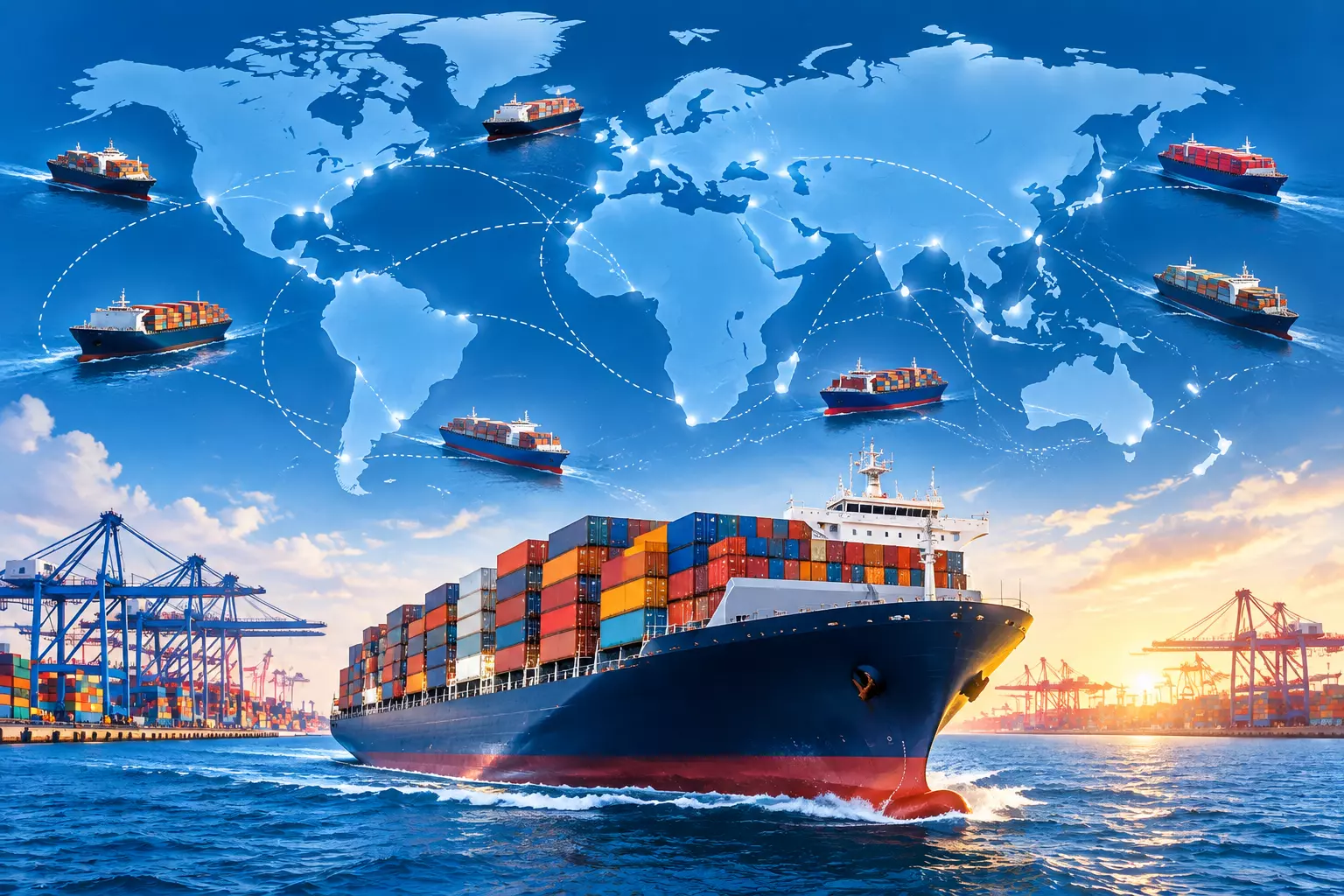
3. Shipping Alliances and Vessel-Sharing Agreements
Major container shipping lines do not operate all their routes independently. Many share vessels and shipping capacity through alliances or specific cooperation agreements, allowing them to offer services under their own brands while using the same vessel operations.
As a result, two different shipping lines may accept bookings for the same vessel and voyage, even though their freight rates and commercial terms differ.
Major Container Shipping Alliances in 2026
| Alliance or Network | Participating Shipping Lines | Key Characteristics |
|---|---|---|
| Gemini Cooperation | Maersk and Hapag-Lloyd | Mainline services and regional connections on major East–West trade routes |
| OCEAN Alliance | CMA CGM, COSCO SHIPPING, Evergreen, and OOCL | Shared vessel network covering major international trade routes |
| Premier Alliance | ONE, HMM, and Yang Ming | Cooperation on major East–West routes connecting Asia, Europe, North America, and the Middle East |
| MSC | Independent network and specific cooperation agreements | Operates its own shipping network while sharing capacity with other carriers on selected services |
| ZIM | Independent services and cooperation agreements | Participates in specific slot-sharing and vessel-sharing agreements |
MSC and ZIM are not members of the three alliances listed above. They are included to illustrate their different operating models.
These arrangements primarily cover selected trade routes. Individual shipping lines may also operate services outside their alliances or establish separate agreements with other carriers.
Can Two Different Shipping Lines Transport Your Cargo on the Same Vessel?
Yes. For example, ONE and Yang Ming may sell container slots on the same service operated under Premier Alliance.
If both freight quotations refer to the same vessel, voyage, and port rotation, the actual ocean transportation may be virtually identical. However, each shipping line maintains its own freight rates, booking conditions, and commercial agreements.
The same arrangement can exist outside major shipping alliances. MSC and ZIM, for example, maintain agreements to share vessels and exchange container slots on selected routes between Asia and the U.S. East and Gulf Coasts.
Therefore, receiving quotations from different shipping lines does not necessarily mean having access to different routes or sailing schedules.
To distinguish between the available options, it is useful to compare the service name, vessel, voyage number, and scheduled port calls. Membership in a shipping alliance alone does not determine which carrier offers the most suitable option for a particular shipment.
4. Which Shipping Lines Operate Between China and Latin America?
MSC, COSCO SHIPPING, CMA CGM, Hapag-Lloyd, ONE, and other international shipping lines provide ocean freight services between China and Latin America. However, their coverage varies depending on the country, destination port, and available connections.
Shipping routes to Mexico and the Pacific coast of Latin America differ from those serving Brazil, Argentina, and Caribbean ports. Some destinations are served by direct services from Asia, while others require transshipment at regional ports.
Mexico: Manzanillo, Lázaro Cárdenas, and Ensenada
Mexico has ocean shipping services connecting its major Pacific ports with China.
Published service options include Hapag-Lloyd's TPM (Asia–Mexico Express) and ONE's AX4 (Asia Latin America Express 4).
In May 2026, ONE updated its AX4 port rotation, with calls at Shanghai, Ningbo, Qingdao, and Busan, followed by Ensenada, Lázaro Cárdenas, and Manzanillo. The service then continues to Callao in Peru and Posorja in Ecuador before returning to Asia via Yokohama.
This route identifies the Mexican ports served by a specific shipping service from Asia. However, Manzanillo, Lázaro Cárdenas, and Ensenada serve different inland markets and transportation networks.
For imports destined for Mexico City, Guadalajara, the Bajío region, or northern Mexico, port selection also depends on the consignee's location and the inland transportation required after arrival.
West Coast of South America: Colombia, Peru, Ecuador, and Chile
The Pacific coast of South America is served by shipping services connecting Asian ports with various destinations across the region.
ONE operates the AX4 service, whose published port rotation includes Callao in Peru and Posorja in Ecuador. Hapag-Lloyd also offers its AN1 and AN2 services between Asia and the west coast of Latin America.
Not all these services call at the same countries or ports. For example, the AX4 rotation mentioned above does not include Buenaventura in Colombia or Chilean ports. Other carriers, such as CMA CGM, offer direct connections from Asia to Buenaventura and San Antonio through services such as ACSA1.
For cargo destined for Colombia, it is important to distinguish between connections to Buenaventura on the Pacific coast and Cartagena on the Caribbean coast. For Chile, available shipping services should be assessed according to the required port of discharge, such as San Antonio or Valparaíso.
A shipping line's overall coverage in South America does not guarantee a direct port call at every destination.
East Coast of South America: Brazil, Uruguay, and Argentina
Shipping routes between China and the Atlantic coast of South America operate through different services from those connecting Asia with Pacific ports.
MSC operates the Ipanema service, linking Asia with Brazilian ports and the Río de la Plata region. Its destinations include Santos, Paranaguá, Navegantes, Montevideo, and Buenos Aires.
In October 2026, MSC announced a new phase of cooperation with ONE for this service, following the end of the existing agreement structure that also includes Hapag-Lloyd. The first sailing under the new agreement is scheduled to depart from Shanghai on April 3, 2027.
Hapag-Lloyd also lists its ASE and AS2 services connecting Asia with the east coast of South America.
Meanwhile, COSCO SHIPPING announced its ESA3 service in September 2026, with operations scheduled to begin in December of the same year. The published port rotation includes departures from Ningbo, Shanghai, and Shekou, with calls at Santos, Navegantes, Montevideo, and Buenos Aires, among other ports.
These service networks provide different connections to Brazil and the Río de la Plata region. For imports destined for São Paulo, southern Brazil, or Argentina, it is important to identify which port and shipping service best match the cargo's final destination.
Caribbean and Venezuela: Connections Through Transshipment Ports
Shipping services to the Caribbean and Venezuela follow a different network structure. Many destinations are served through regional connections from transshipment hubs rather than direct mainline services from China.
Hapag-Lloyd's published service network provides several examples:
| Transshipment Port | Destinations Served |
|---|---|
| Cartagena, Colombia | La Guaira and Puerto Cabello, Venezuela |
| Manzanillo, Panama | Guanta and Maracaibo, Venezuela |
| Kingston, Jamaica | El Guamache, Venezuela |
| Caucedo, Dominican Republic | Various Caribbean ports |
These connections form part of the carrier's published network and do not mean that every destination has direct sailings from China.
For companies importing goods to Caracas, Valencia, Maracaibo, or eastern Venezuela, the choice of arrival port can affect both the ocean shipping route and the subsequent inland transportation.
It is also important to distinguish between the arrival of the mainline vessel at the transshipment hub and the actual arrival of the cargo at the Venezuelan destination port.
Which Shipping Line Is Best for Imports from China to Latin America?
There is no single shipping line that offers the best option for every destination in Latin America.
ONE, Hapag-Lloyd, MSC, and COSCO SHIPPING operate services covering different combinations of ports, but their networks are not identical, and their commercial terms can change over time.
A shipping line with a larger global fleet may require transshipment to reach a particular destination, while another carrier may offer a more direct connection from the port of origin.
Therefore, choosing a shipping line depends on the specific route, available port calls, and service conditions, rather than solely on the carrier's fleet size or position in the global ranking. 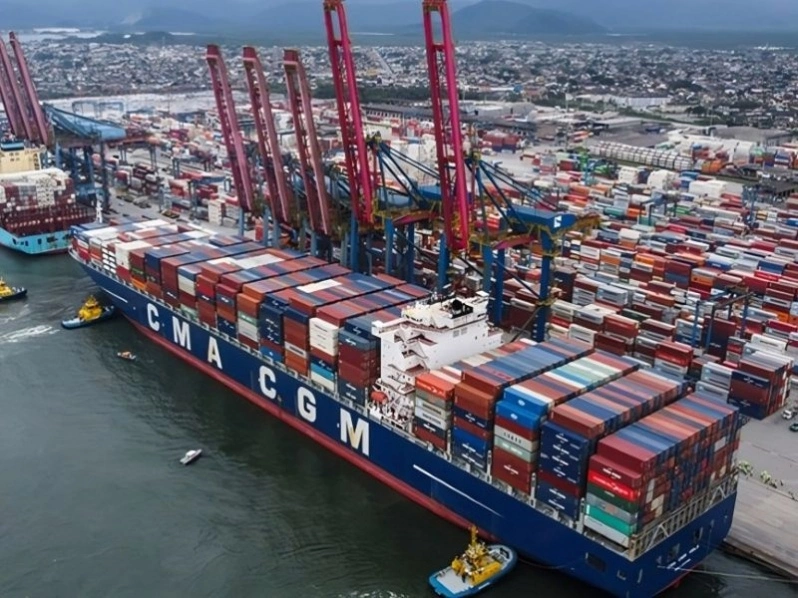
5. How to Choose a Shipping Line Based on Cargo Origin and Destination
The shipping line with the largest fleet does not always offer the most convenient route or the lowest cost for an import shipment. The choice depends on the port of origin, final destination, cargo readiness date, and the terms of the shipping service.
When comparing ocean freight options, several factors can make a significant difference.
Shipping Route and Transit Time
Two shipping lines may offer services between China and the same destination country but use different ports of call and connections.
One option may provide a direct service to the destination port, while another requires transshipment. A service with a shorter published transit time does not necessarily mean the cargo will be available earlier, particularly when a connecting vessel is involved.
It is more useful to compare the estimated arrival date at the final destination port rather than considering only the sailing time of the first vessel.
Sailing Frequency and Space Availability
Sailing frequency also plays an important role in selecting a shipping line.
A carrier may offer an attractive transit time, but its scheduled departure may not align with the date when the cargo is ready. Another carrier may have a later sailing that allows more time to complete the shipment arrangements.
In addition, vessel space and container availability can vary depending on the port of origin, season, and required equipment type.
For FCL shipments, it is also important to consider container gate-in cut-off times, documentation deadlines, and the deadline for submitting the Verified Gross Mass (VGM).
Freight Rates, Destination Charges, and Free Time
Comparing ocean freight rates alone can lead to the wrong decision.
Two quotations may include different origin and destination charges, surcharges, payment terms, and free-time allowances for demurrage and detention.
Demurrage generally applies when a container remains at the terminal beyond the allowed free period, while detention relates to the time the container is kept outside the terminal before being returned. Depending on the shipping line and port, free-time allowances may be calculated separately or combined.
These conditions are particularly important when cargo may remain at the port for several days before collection or when additional time is needed to return the empty container.
Quotations should be compared on the same service scope, taking into account the costs the importer will actually be responsible for.
Port of Discharge and Final Delivery
The port offering the lowest ocean freight rate does not always provide the lowest total cost to the importer's warehouse.
For example, a company importing goods from China to central Mexico may compare shipping services to Manzanillo and Lázaro Cárdenas. Although both ports handle international cargo, inland transportation costs and connections to the final destination may differ.
The same situation applies when importing into Colombia through Buenaventura or Cartagena, or when choosing between Brazilian ports for deliveries to different regions of the country.
In these cases, comparing the entire transportation route is more useful than selecting a shipping line based solely on its port-to-port freight rate.
Practical Comparison of Two Ocean Freight Options
Suppose an importer needs to ship a 40HQ container from Ningbo to a warehouse in inland Mexico and receives two quotations:
| Comparison Factor | Option A | Option B |
|---|---|---|
| Port of discharge | Manzanillo | Lázaro Cárdenas |
| Ocean freight service | With transshipment | Direct service |
| Ocean freight rate | Lower | Higher |
| Inland transportation cost | Higher | Lower |
| Delivery date | Subject to sailing and transshipment schedules | Subject to direct sailing schedule |
Hypothetical example illustrating the comparison criteria. The options do not represent actual freight quotations.
Option A may initially appear more economical when considering only the ocean freight rate. However, if inland transportation and destination charges are higher, the initial cost advantage may disappear.
Option B is not necessarily the better choice simply because it offers a direct service. Its sailing date, total transportation cost, and delivery conditions remain important factors.
The most suitable option is the one that provides a viable shipping route and a competitive total cost for the specific cargo and destination, rather than simply choosing the largest shipping line or the lowest ocean freight rate.
Conclusion
The ten largest container shipping lines account for a significant share of global container shipping capacity, but their service networks and port connections differ. A company's position in the global ranking reflects its operating capacity, but does not determine which carrier offers the best option for a specific route.
For imports from China, it is important to compare available services to the destination port, sailing schedules, potential transshipments, and total transportation costs.
Need to Ship Goods from China to Latin America?
At China Latin Freight, we arrange FCL and LCL ocean freight shipments from China to Latin America, including factory pickup, cargo consolidation, and door-to-door delivery when required.
Tell us your cargo type, shipping origin, and destination. We will help you evaluate the available shipping options and prepare a freight quotation based on your requirements.