Why have maritime freight rates skyrocketed since May 2026 and why has booking space run out?
2026-05-27 17:20
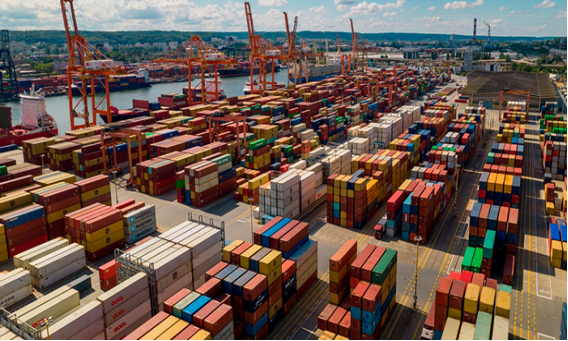
Since the beginning of May 2026, the international shipping market has experienced a sharp increase in freight rates and a widespread shortage of space on key routes: Asia-Europe, Asia-Mediterranean, and Asia-North America. Many clients are asking us: Why now? Is it temporary? What factors are causing this chaos? In this article, we will analyze the real causes behind this phenomenon .
Prolonged geopolitical tensions and affected routes
Although the global market expected the disruptions to shipping routes to be temporary, the geopolitical situation in the Middle East has stalled. Recently, the escalating tensions in the Strait of Hormuz (adding to the already protracted Red Sea crisis) have had a significant impact : Much of the world's container ship fleet is still being forced to round the Cape of Good Hope (South Africa) instead of transiting the Suez Canal. This longer route adds 10 to 14 days to the voyage, causing ships to take much longer to return to China to reload. With ships "stuck" on longer journeys, the actual transport capacity in the market is drastically reduced.
Rising operating costs
Basic operating costs for shipping — such as fuel, crew, and port fees — have increased, driven by global factors such as energy prices and changes in supply chains.
In addition, shipping companies have activated multiple surcharges that were previously sporadic, but are now frequently applied on many routes: Peak season surcharge , Bunker adjustment factor and Emergency freight surcharge .
These surcharges increase the total cost per container , causing the final freight price to rise even if the distance or volume does not change.
Advance demand and the psychological effect of the market
Traditionally, the peak season for shipping begins in July or August To prepare for Christmas , but this year, fearing new increases in freight and tariffs or new logistical delays due to uncertainty in global trade policies , many importers have brought their orders forward to May, generating higher than normal demand.
Deliberate reduction of capacity by shipping companies
Aside from the sudden surge in demand, another, even more significant factor has been the cancellation of a substantial number of scheduled sailings by major shipping lines . This phenomenon, known in the industry as "blank sailings ," is a common strategy for managing supply.
What does this mean?
Although technically there are enough ships, not all of them are operating.
By withdrawing capacity from the market, shipping companies are able to better balance supply and demand and sustain higher freight rates.
This quickly creates a shortage of available slots, even when demand has not increased explosively.
What can we expect in the coming weeks and how can we protect our business?
Peak season surcharges (PSS) and general rate increases (GRI) are already scheduled to continue through June 2026. Fuel price volatility due to the current energy situation also does not help prices fall in the short term.
Our recommendations from China Latin Logistics :
Plan well in advance : Do not book your cargo 1 or 2 weeks in advance; currently, shipments must be scheduled at least 3 or 4 weeks in advance to secure space and equipment.
Port flexibility : If the main port is congested, discuss alternative routes or secondary departure ports with us.
Accept short-term rates : In this volatile market, prices change weekly. Securing a rate and space today is safer than waiting for the price to drop next month.
Today's market demands experience and constant communication. At China Latin Logistics, we continuously monitor the situation minute by minute at China's main ports to offer the best space and rate solutions for your imports to Spain and Latin America.
Contact us today to check the status of your upcoming orders!
Written by Yen

 Español
 English
 Português