Importing from China to South America: Advantages and Practical Recommendations
2026-06-13 10:16
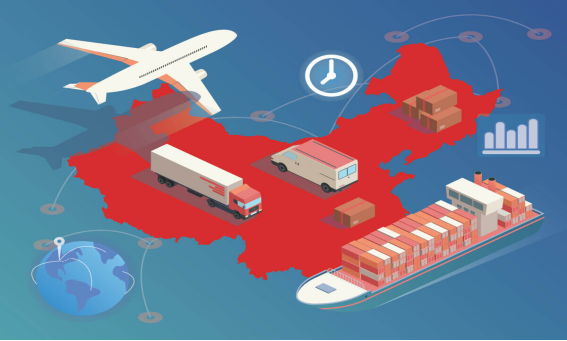
The global supply chain continues to adjust, but China remains the main source of goods for the South American market. The advantages have not disappeared, only the threshold to take advantage of them has become higher.
Why still import from China?
The price-to-quality ratio of Chinese products remains difficult to match. At the same quality, the factory price in China is significantly lower than local production or sourcing from other countries. At the same time, China can manufacture practically any product category, allowing South American importers to make integrated purchases without having to source from multiple countries. In addition, response times from Chinese factories are faster: sampling and production lead times are generally shorter than in other Asian countries. Maritime transport is also seeing continuous improvements. For example, since the Chancay Port in Peru came into operation, the China-Peru route has been shortened by more than ten days, and logistics costs have dropped by approximately 30%.
Challenges for South American importers
The main current challenges are concentrated in four areas.
First, shipping instability: space shortages and freight rate volatility require booking weeks in advance.
Second, customs complexity: policies change frequently, and tariff trends have generally become more restrictive.
Third, difficulty selecting reliable suppliers: information asymmetry makes it hard to find serious factories.
Fourth, currency and financial risk: in some countries, banking policies can limit the receipt of international payments.
Six practical recommendations
First, book space in advance. Do not wait until your goods are ready. We recommend securing space two to three weeks before the cargo is finished and including a logistics buffer in agreed delivery deadlines.
Second, choose a freight forwarder who knows South America well. Look for partners who have fixed contracts with carriers on South American routes and understand the customs requirements of the destination country.
Third, strictly comply with regulations. Recently, schemes have appeared offering to divert goods through third countries to avoid tariffs. In most cases, these operations are extremely risky. Make sure that your document flow, payment flow, and logistics flow are perfectly aligned, and never use false certificates of origin.
Fourth, build long-term relationships with your suppliers. Chinese factories work best with customers who maintain stable orders and on-time payments. Start with small trial orders and build trust gradually. During peak seasons, a long-term partner will often prioritize your orders.
Fifth, optimize your payment route. In countries with banking restrictions, consider using currencies other than the US dollar, such as the yuan or euro. You can also check with your bank in advance about the required import documents to avoid money arriving but not being able to be credited to your account.
Sixth, consider using a professional sourcing agent. If you handle many categories, small volumes per order, or do not know the Chinese market well, a sourcing agent can help you select suppliers, consolidate cargo from multiple factories to reduce logistics costs, and manage export, customs clearance, and space booking.
Conclusion
Importing from China to South America is not for those who only look for the lowest price, but for those who plan logistics in advance, respect regulations, and build solid relationships with reliable partners.
We specialize in logistics and sourcing services between China and South America. Contact us for a no-obligation consultation.
Written by yaritza

 Español
 English
 Português